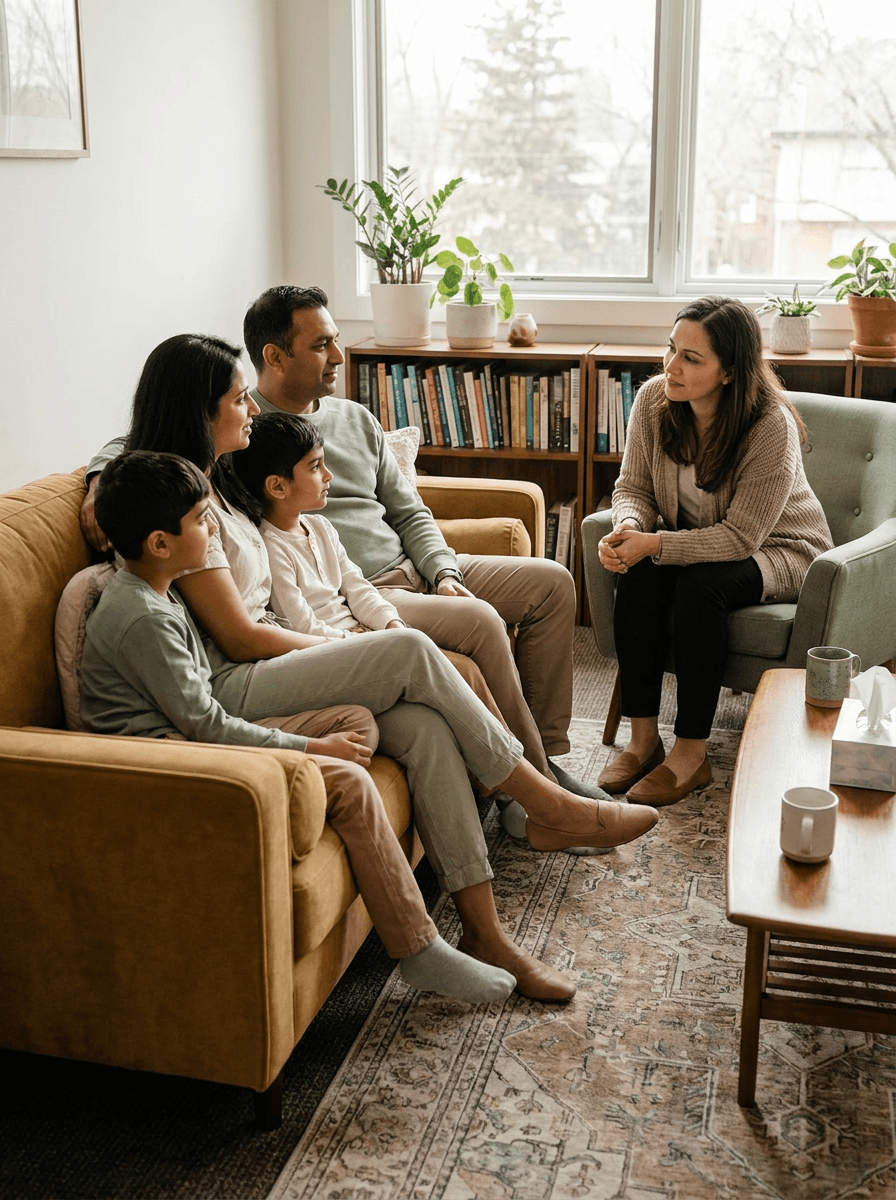
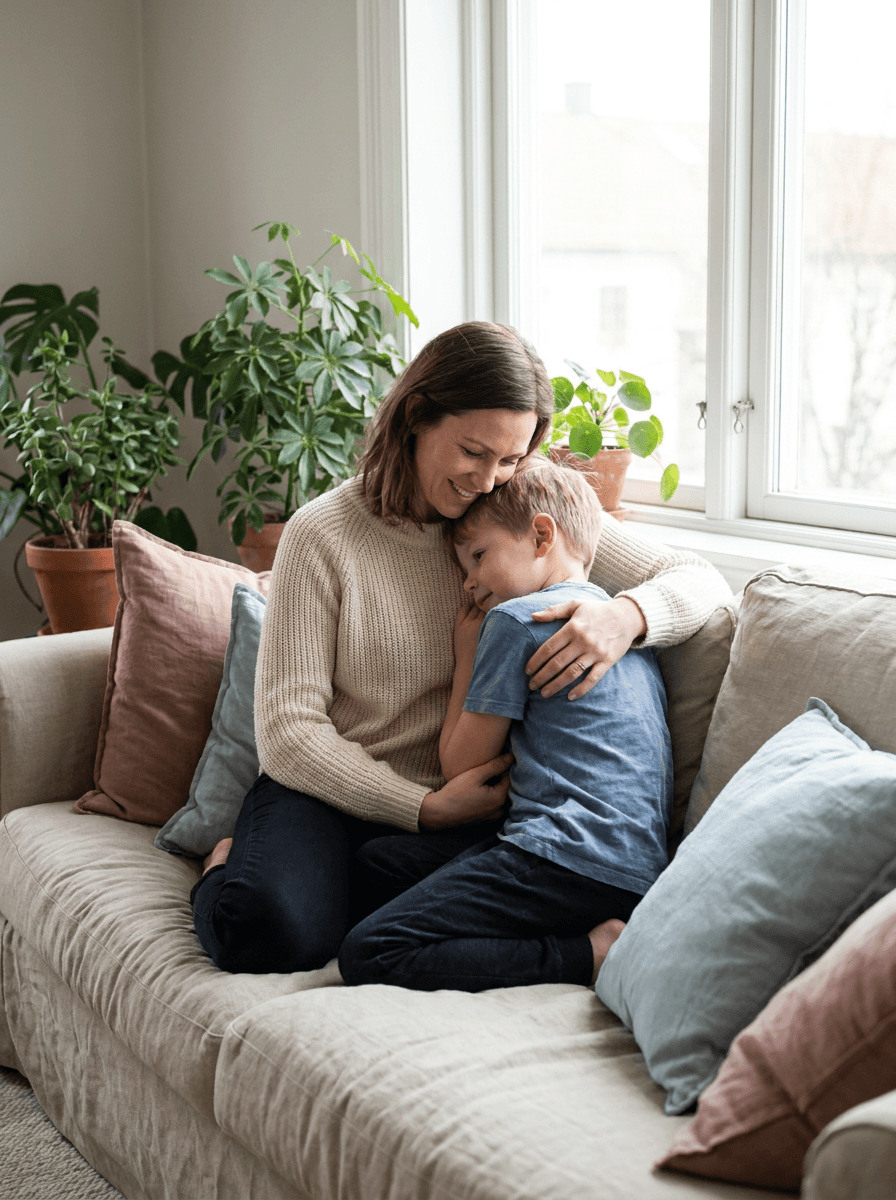
Family counselling is an approach that places relationships, rather than any single person, at the centre of the work.
It rests on the idea that a family is more than a collection of individuals, it is a living system, with its own rhythms, roles, and ways of relating that develop over time. Each member shapes and is shaped by the others, and the connection between people holds something that none of them carries alone.
Because of this, family counselling looks less at who is struggling and more at the patterns that move between people such as how conversations tend to unfold, how closeness and distance get negotiated, how stress ripples through a household, and how care is expressed and received. These patterns are rarely anyone’s fault. They emerge naturally as families adapt to the demands of life, and they can shift in meaningful ways when a family chooses to look at them together.
Because of this, family counselling looks less at who is struggling and more at the patterns that move between people such as how conversations tend to unfold, how closeness and distance get negotiated, how stress ripples through a household, and how care is expressed and received. These patterns are rarely anyone’s fault. They emerge naturally as families adapt to the demands of life, and they can shift in meaningful ways when a family chooses to look at them together.